Expansion of Education Subsidies and Controversial Cash Distributions
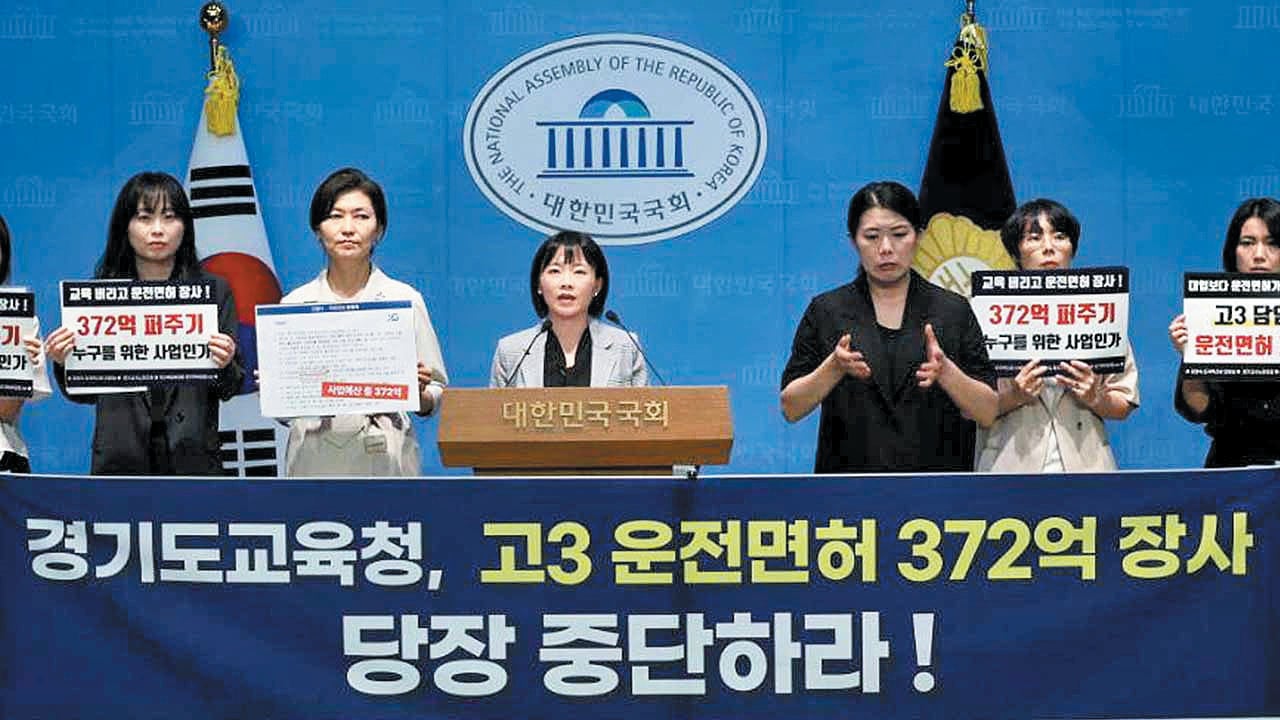
In recent years, several local education offices in South Korea have launched initiatives aimed at providing financial support to students. One such initiative is the Gyeonggi Office of Education’s project, which offers 300,000 Korean won to all third-year high school students in the province. This funding is intended for acquiring various licenses, including driver’s licenses. The annual budget allocated for this program amounts to 37.2 billion Korean won.
Meanwhile, the Gwangju Office of Education has announced a similar plan that will provide vouchers worth between 670,000 and 970,000 Korean won per student. These vouchers can be used at bookstores and stationery shops and will be available to all middle and high school students starting next year. This year’s budget for the program is 41.4 billion Korean won, with an expected increase to 60 billion Korean won in the following year.
As superintendent elections approach, many critics argue that these cash distributions are not just educational support but also a form of vote-buying. With the upcoming elections, the timing of these financial incentives raises concerns about their true purpose. Third-year high school students, who are eligible to vote in the next election, are being targeted specifically by some education offices, leading to accusations of political manipulation.
Rising Budgets and Public Criticism
According to data from the National Assembly, the total budget for cash-based support provided by education offices nationwide this year stands at 599.1 billion Korean won. This represents a significant increase, having doubled over the past four years. Over the last five years, the total amount of cash distributed by these offices has surpassed 2 trillion Korean won.
The Gyeonggi Office of Education’s decision to focus on third-year high school students has drawn sharp criticism. The Gyeonggi Teachers’ Union has condemned the move, stating, “Supporting those aged 18, who are voters, is a waste of taxpayers’ money unrelated to the essence of education.” The union argues that such actions are not only financially irresponsible but also ethically questionable, especially given the current state of the education sector.
Critics have pointed out that the education sector, which should be focused on learning and development, is instead engaging in practices that resemble criminal conduct. The distribution of large sums of money to potential voters right before elections has sparked widespread concern about the integrity of the system.
Systemic Loopholes and Financial Disparities
The ability of superintendents to distribute such large sums of money stems from loopholes in the local education subsidy system. A portion of domestic taxes—specifically 20.79%—is automatically allocated to local education offices each year. This translates to 7.23 trillion Korean won this year alone. Despite a declining number of students, the subsidy continues to grow annually, creating a situation where there is little accountability for how the funds are spent.
This lack of oversight has led to the practice of distributing cash without a sense of guilt. While the system allows for such spending, it raises questions about whether these funds are being used effectively for educational purposes or simply as political tools.
In contrast, universities across the country have been facing financial difficulties for over 16 years due to the government’s tuition freeze policy. This policy has placed a heavy burden on higher education institutions, limiting their ability to invest in infrastructure and academic programs. Some argue that sharing a portion of the local education subsidy with universities would benefit both students and educators. However, superintendents have consistently resisted such proposals, further highlighting the imbalance in resource allocation.
Conclusion
The growing trend of cash distributions by education offices raises important questions about transparency, accountability, and the true purpose of these financial incentives. As the debate over the use of public funds intensifies, it becomes increasingly clear that the system needs reform to ensure that resources are used in ways that genuinely support education rather than political interests.
Comments
Post a Comment